
Every screen
This is the actual program.
Not mockups, not a designer's impression. Every picture below is a screenshot of WritersBox running, with a real script and a real world in it.
01 · The page
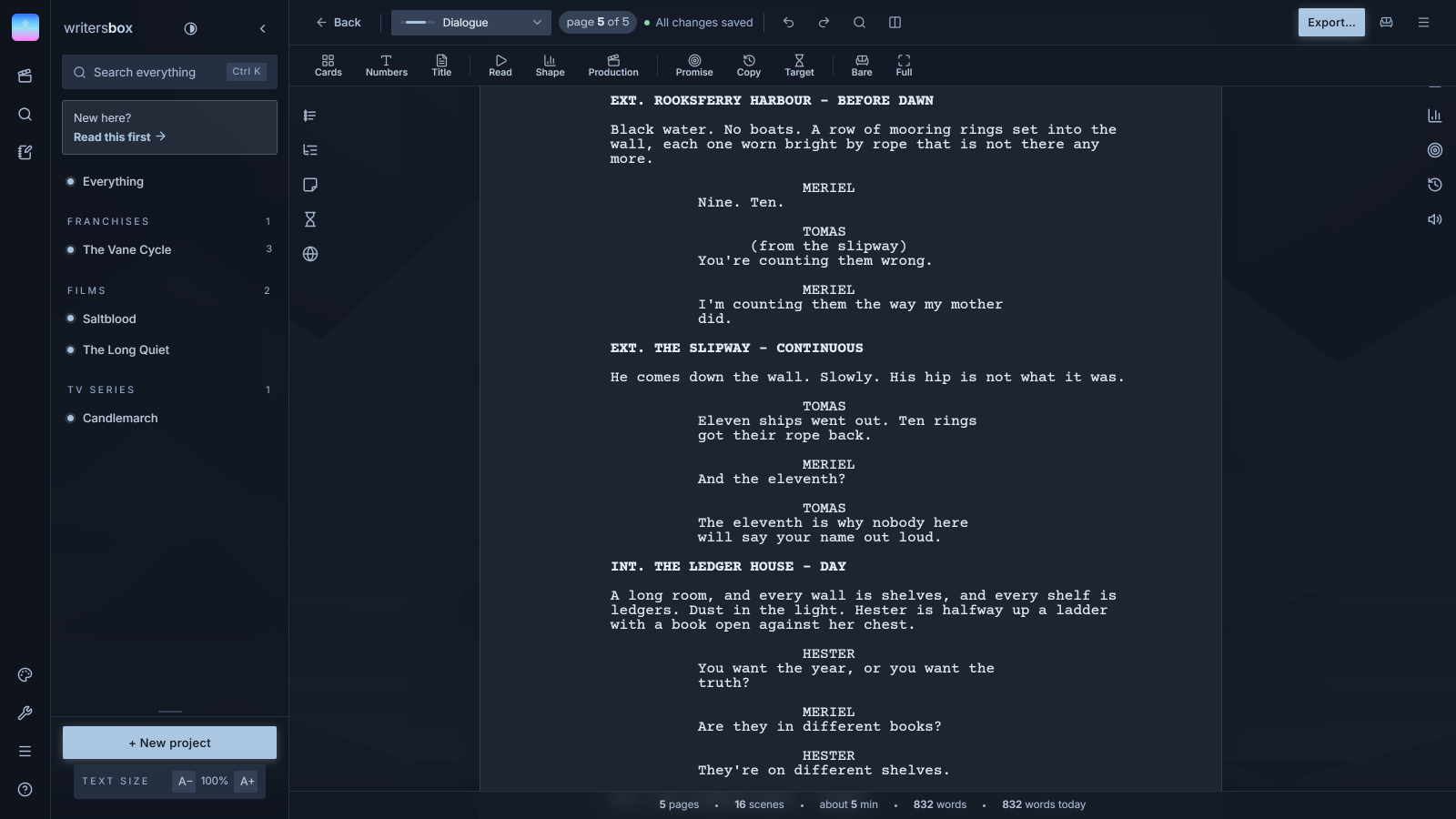
A real page, counted the way a printed one is
12pt Courier, sixty characters across, fifty-five lines down, US Letter. The number in the bar is the number in the PDF, because the same arithmetic does both. Eight formats, each paginating by its own rules.
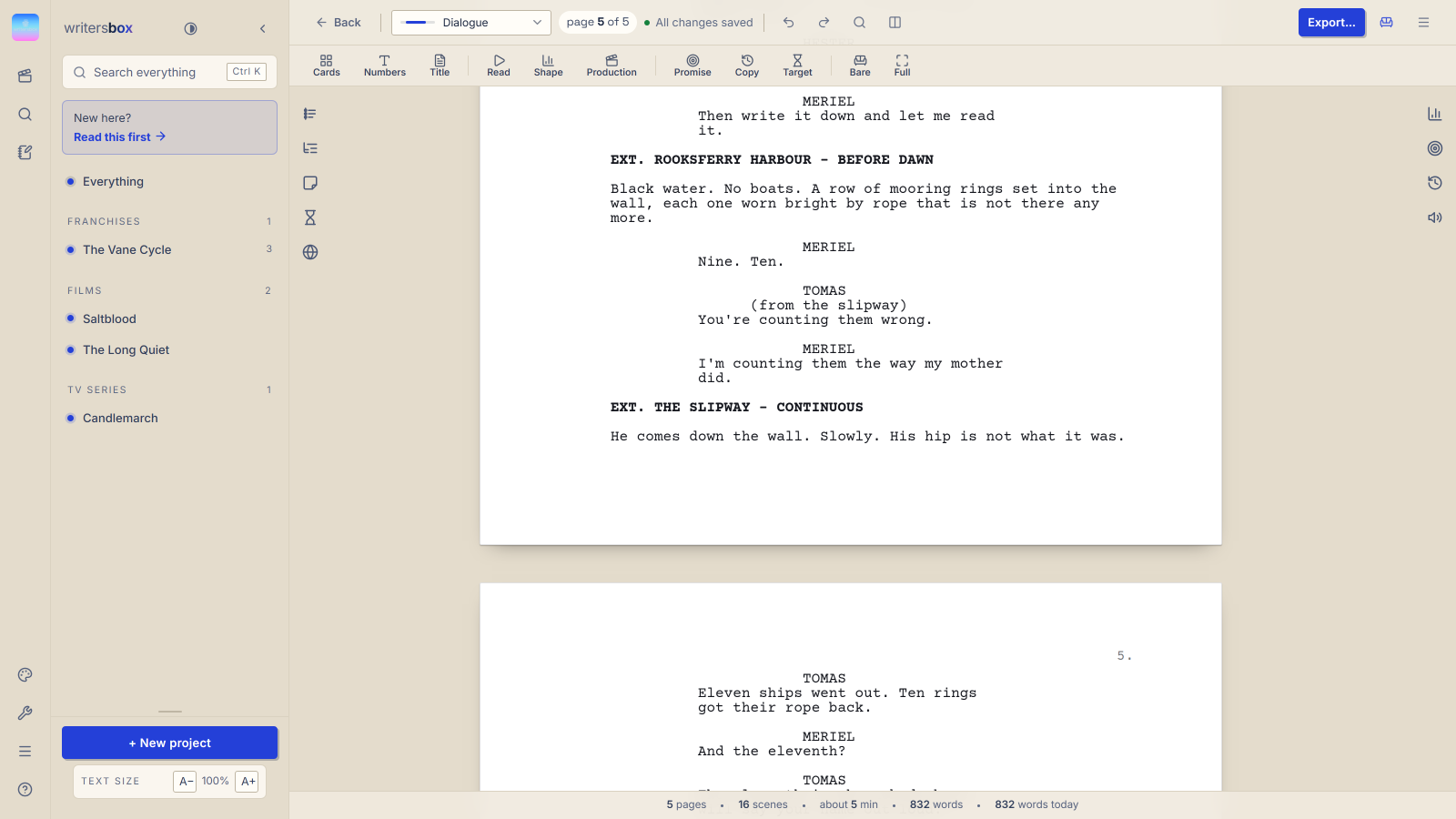
Every other screenwriting program gives you the page and stops. This is where the rest of it lives.
02 · The world
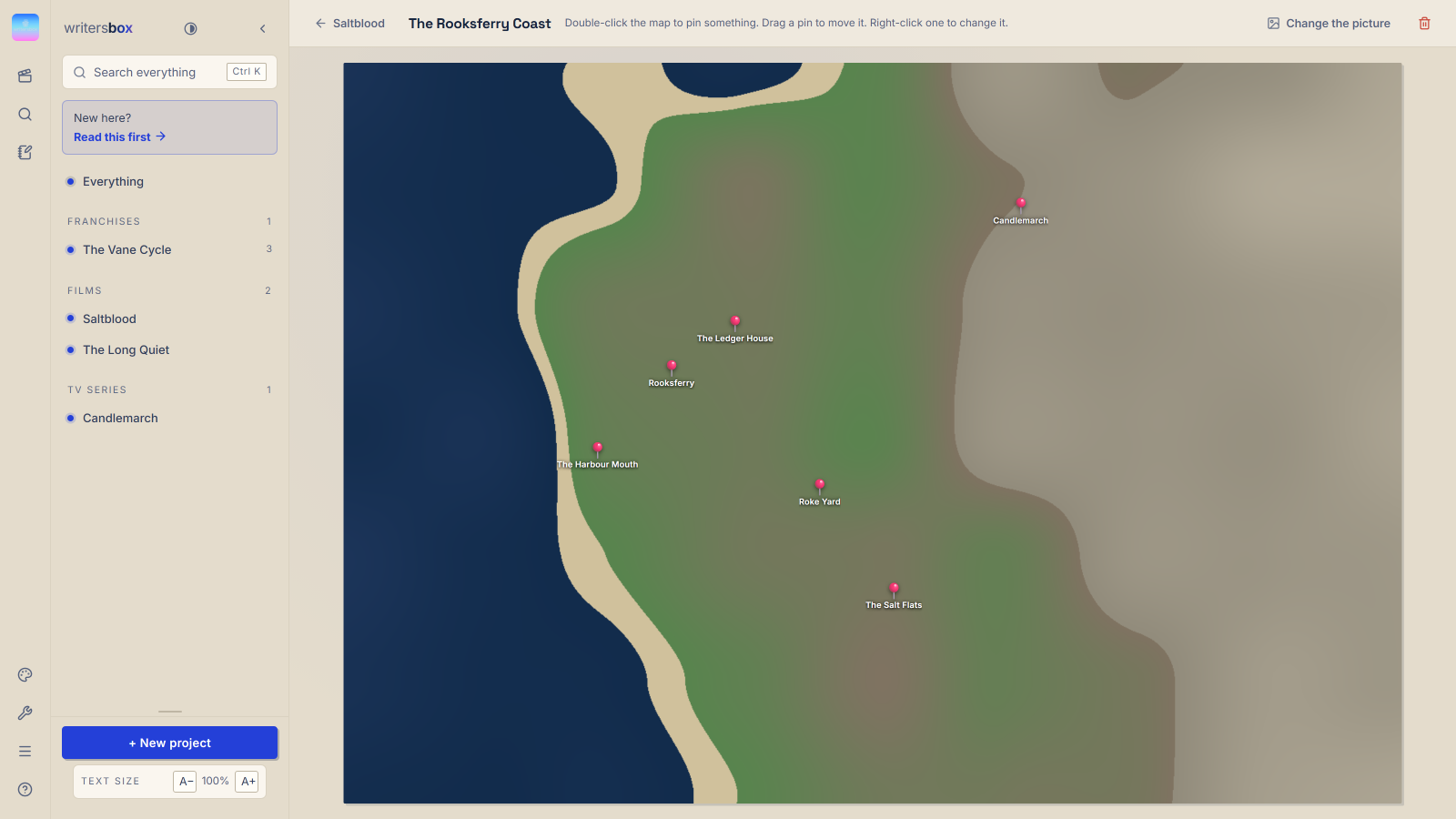
Hang your own map and pin it
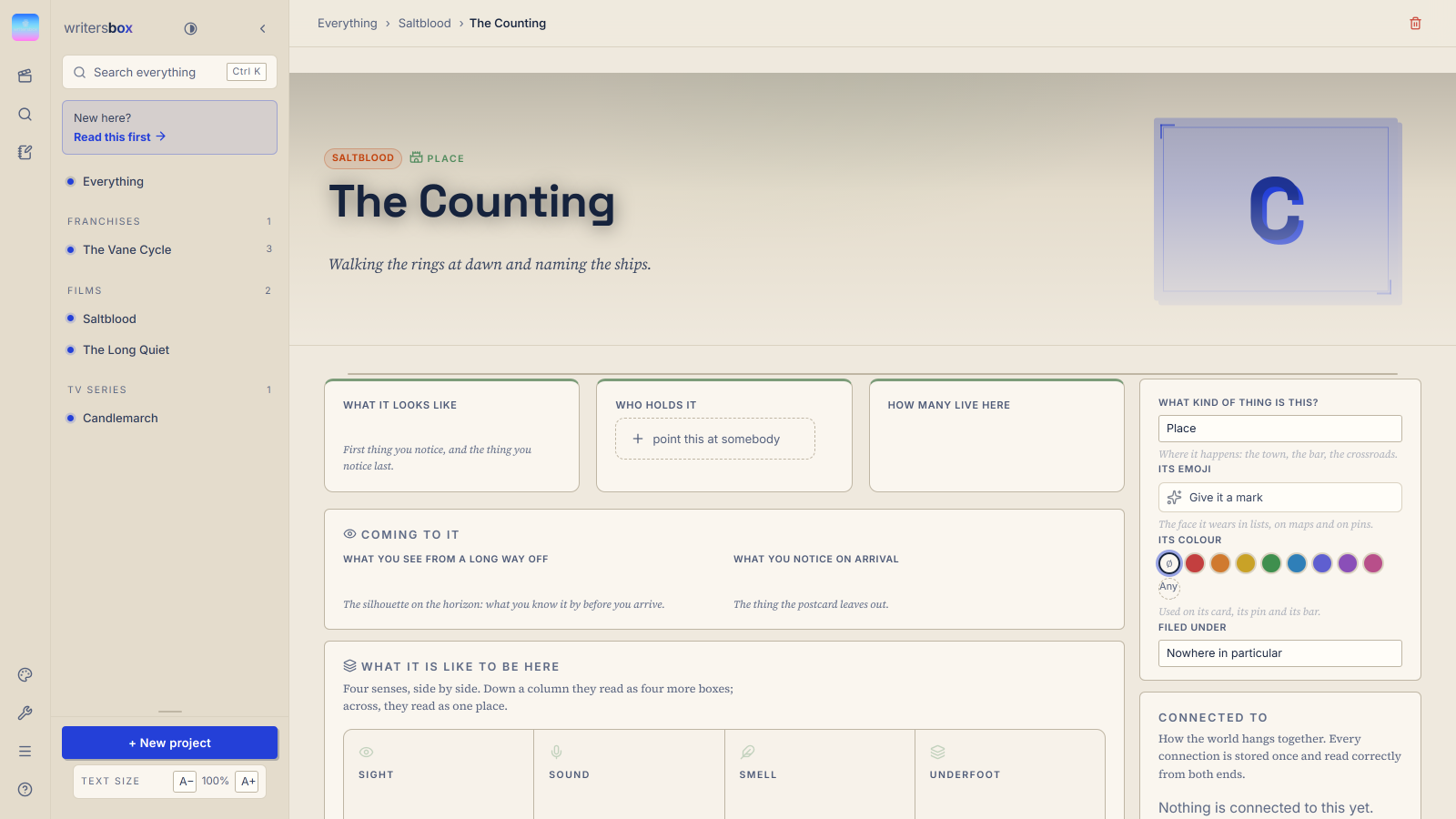
Upload the map you already have, double-click to drop a pin, and pin a place, a person, or another map. A pin on the continent opens the city. A pin on the city opens the castle floor.
03 · The people
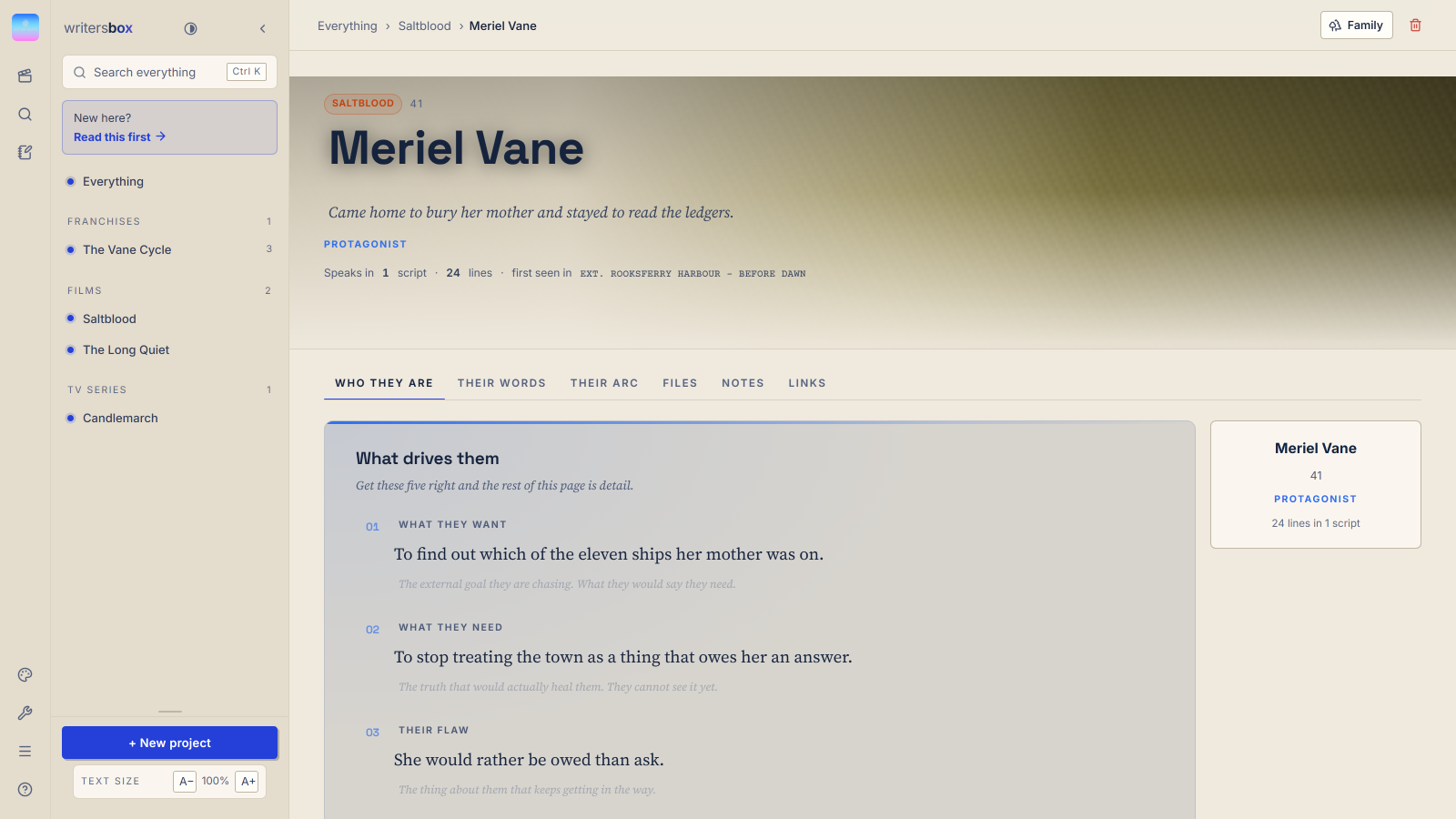
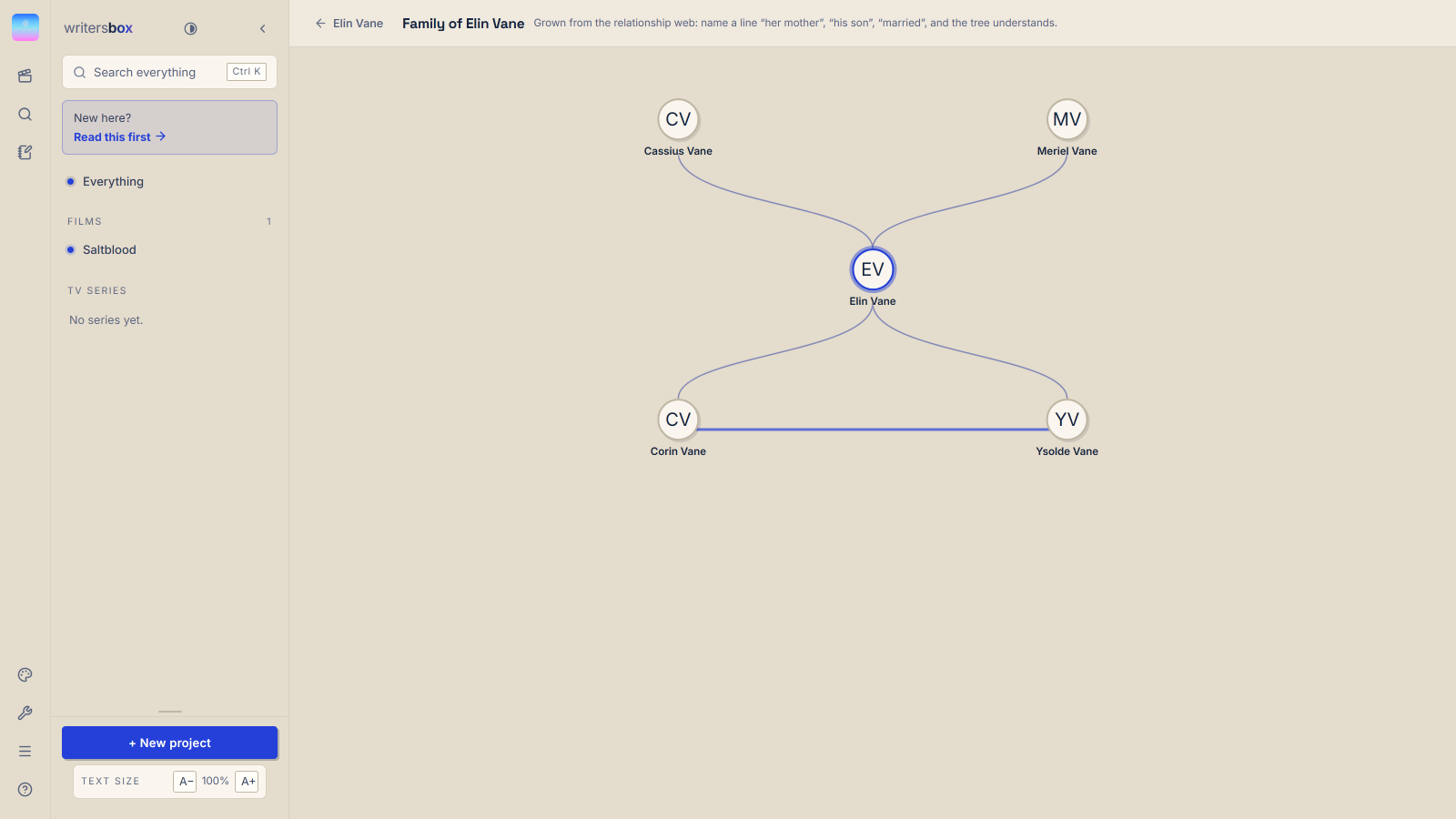
Characters, and the families they come from
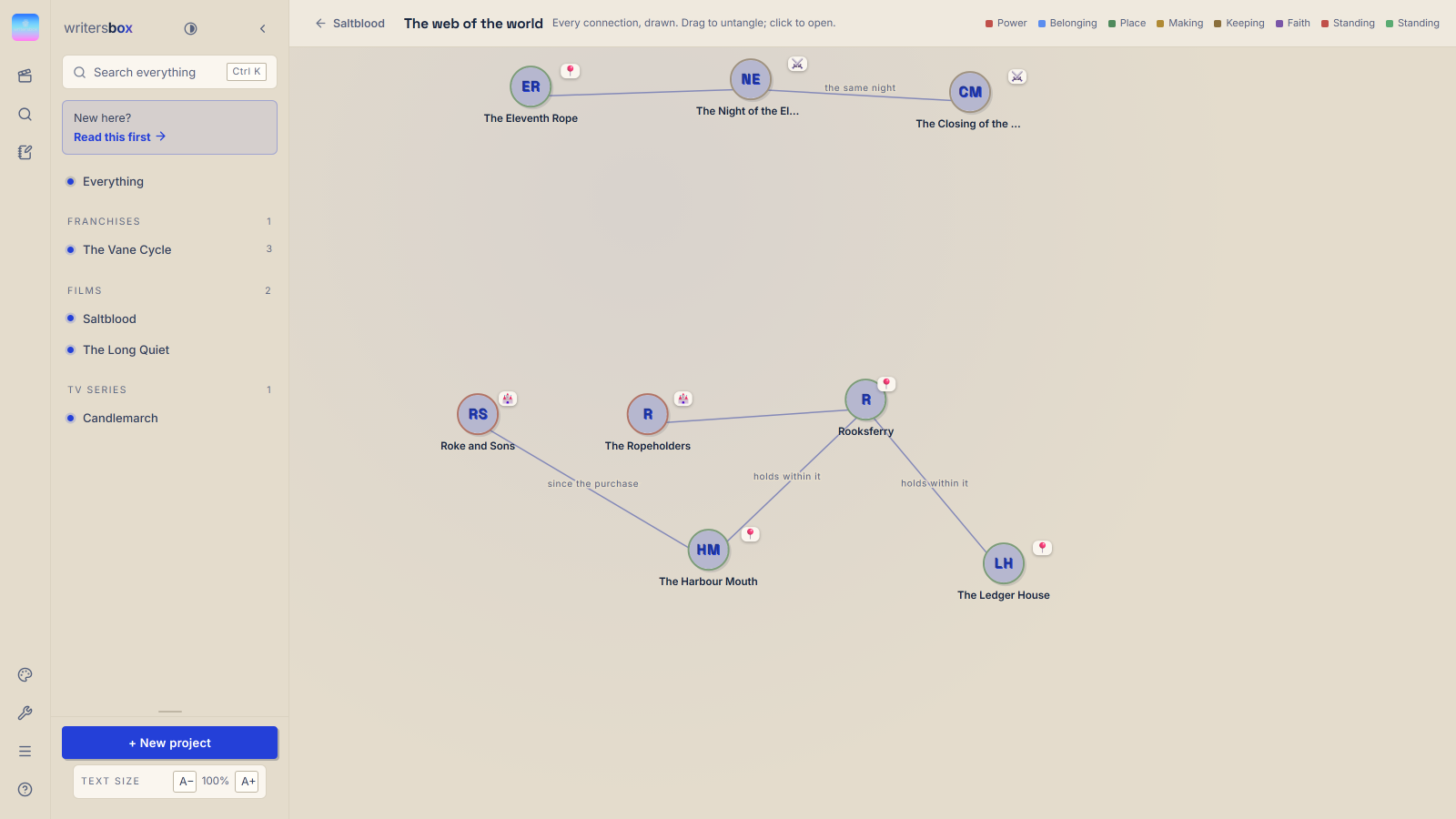
A dossier asks what they want, what they need, what the wound was and what they're hiding. Then the tree works out how they're all related, from lines you already wrote.
04 · The saga
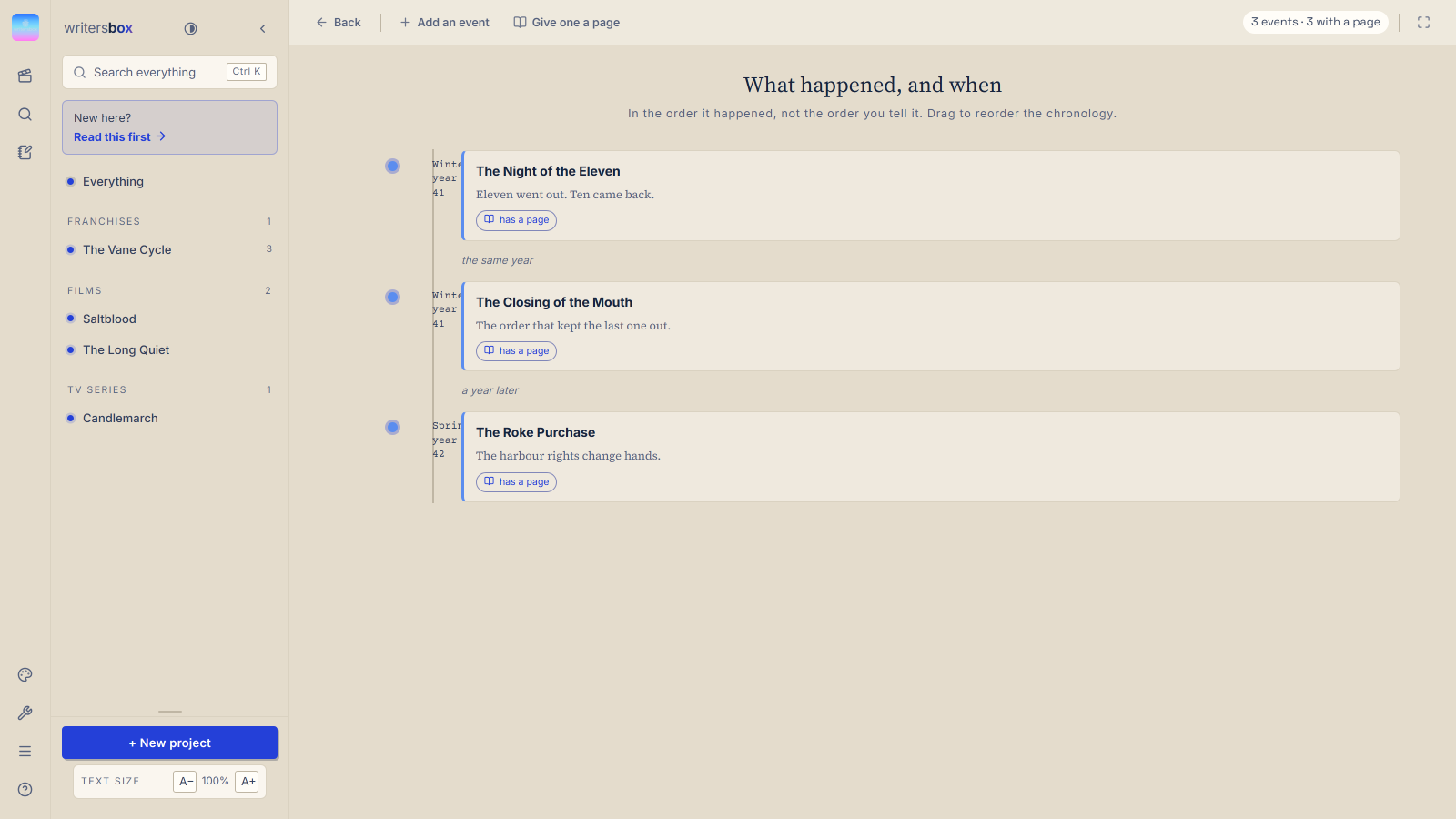
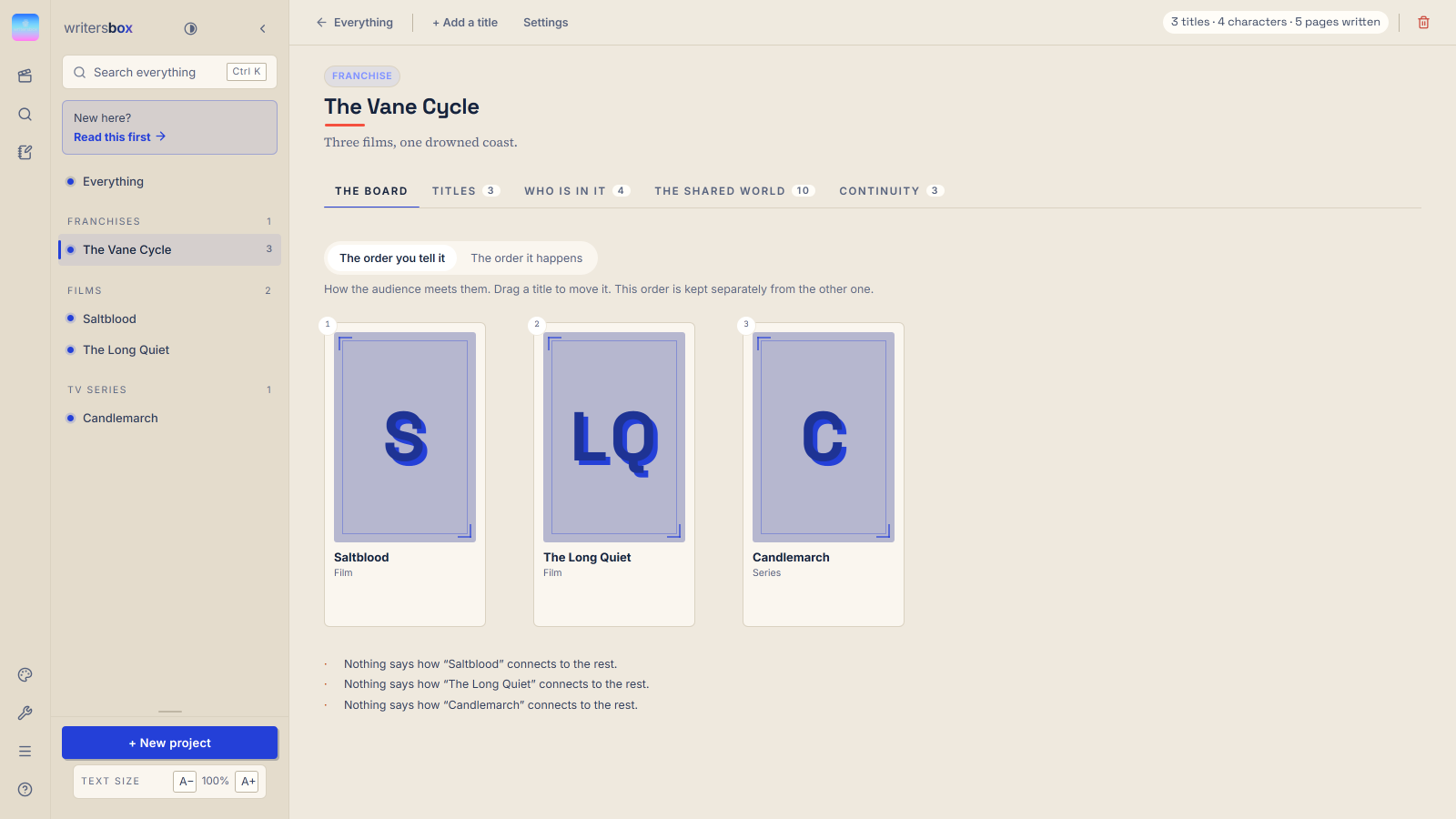
Two orders, kept apart
The order you tell it's how the audience meets your stories. The order it happens is when the events occur. Write one prequel and those become different lists, and treating them as one is how continuity goes wrong.
05 · Out of the door
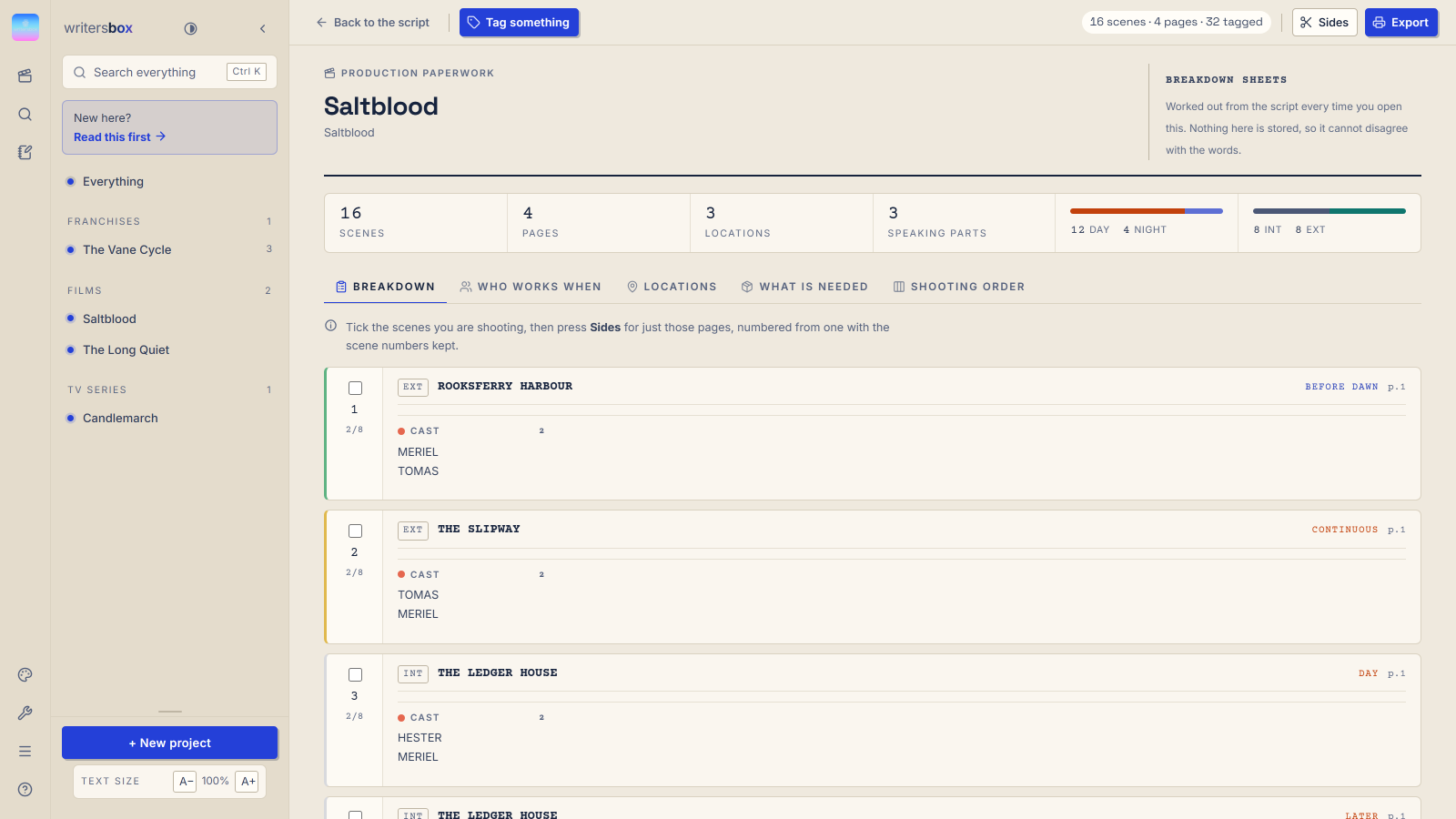
Paperwork that can't disagree with the script
Breakdowns, reports and sides are worked out from the words every time you open them. Nothing is stored, so nothing goes quietly stale after a rewrite.
06 · How it looks
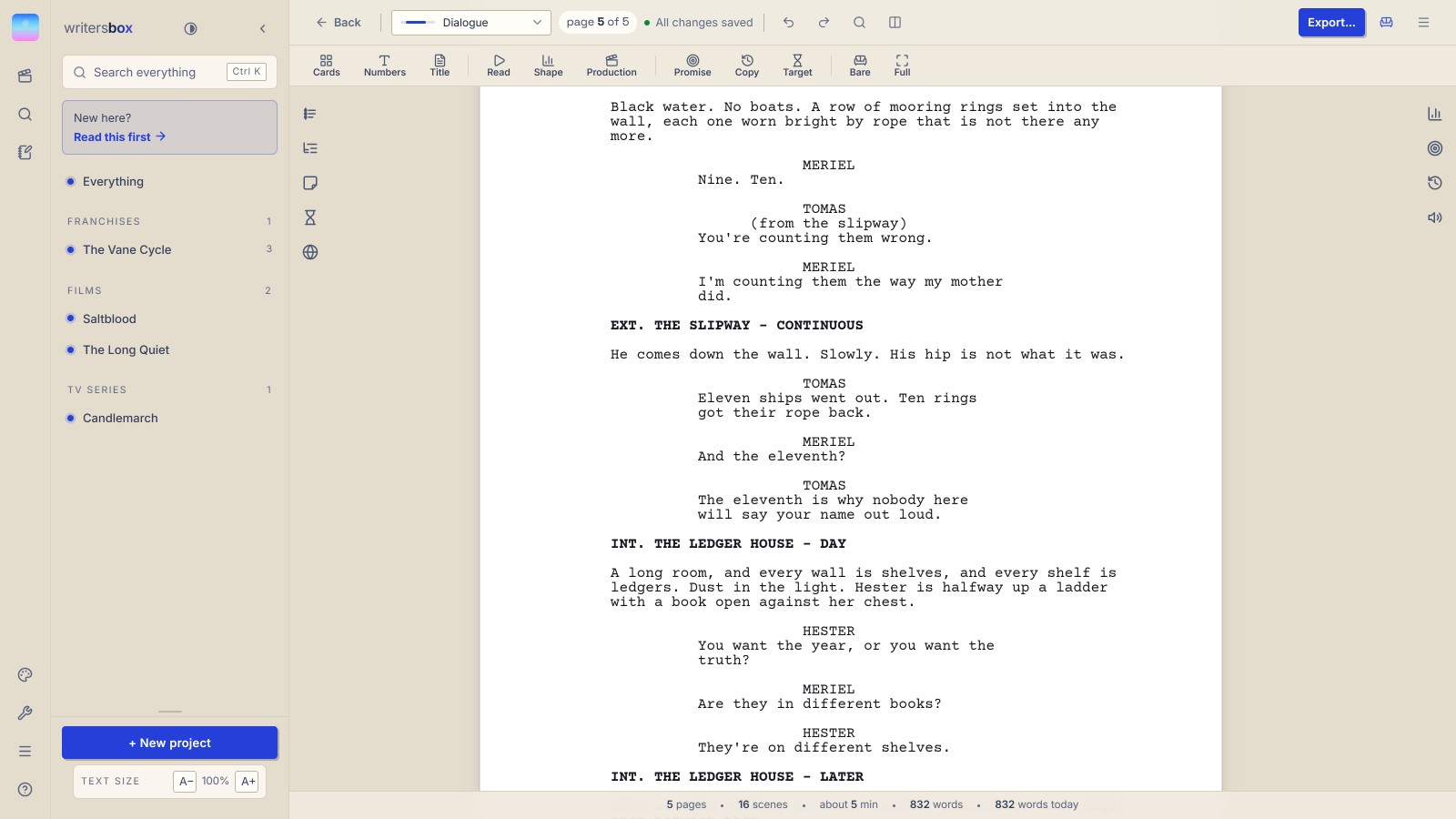
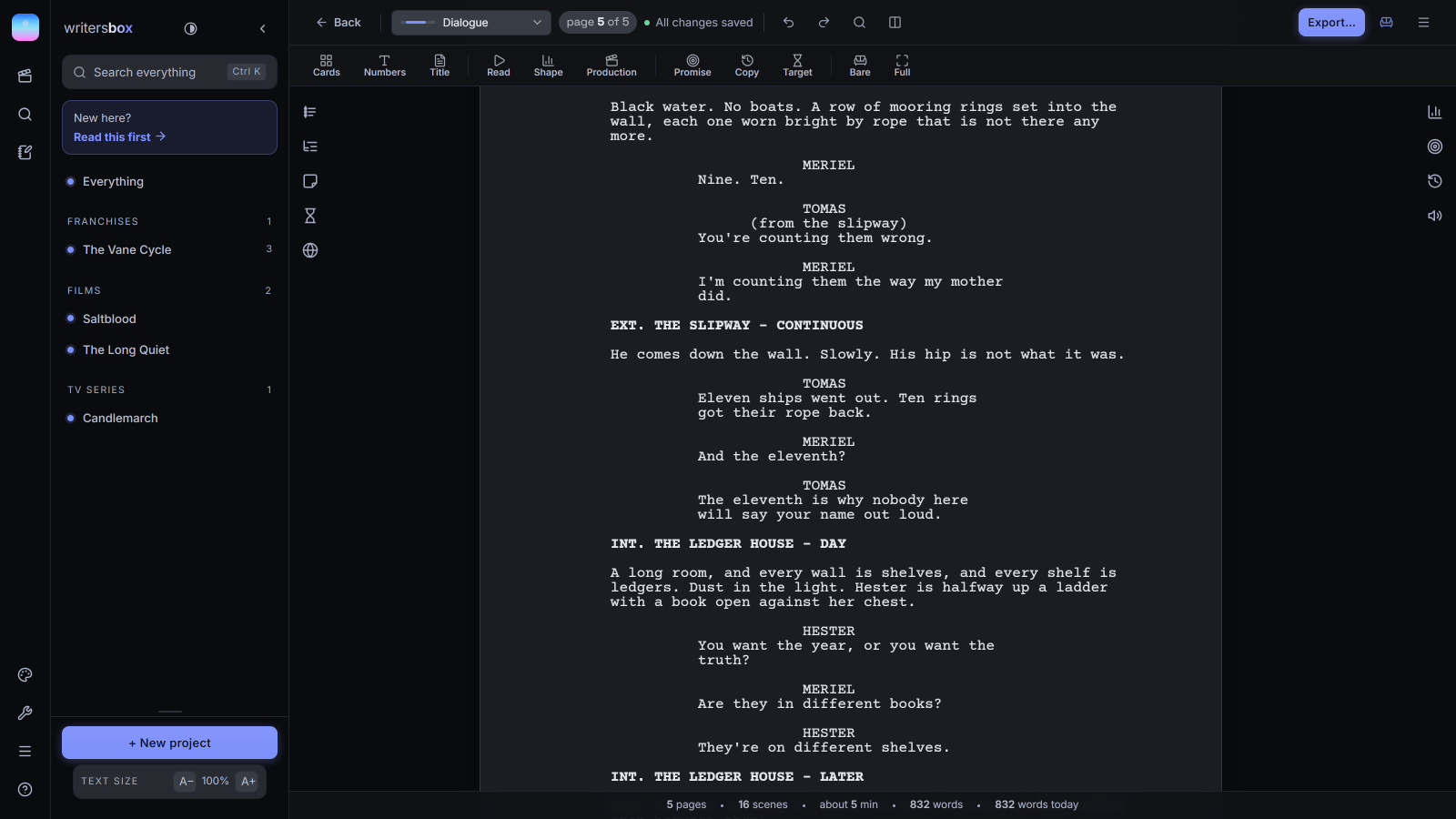
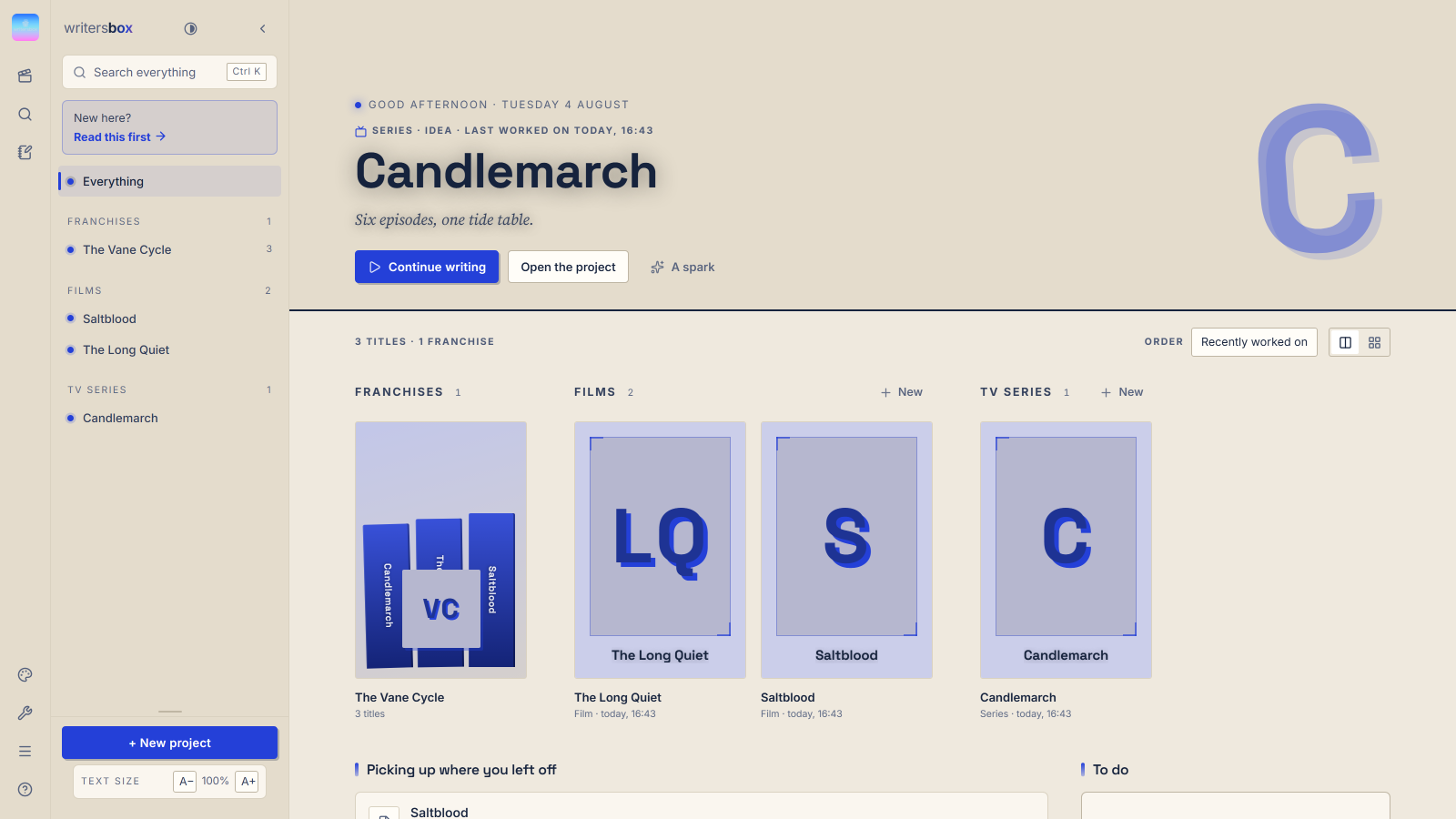
Eight themes. Same screen, click through them.
Riso is the one it opens in: warm paper, flat inks, no gradients anywhere. The other seven are there for people who want the room darker, or brighter, or somewhere else entirely.
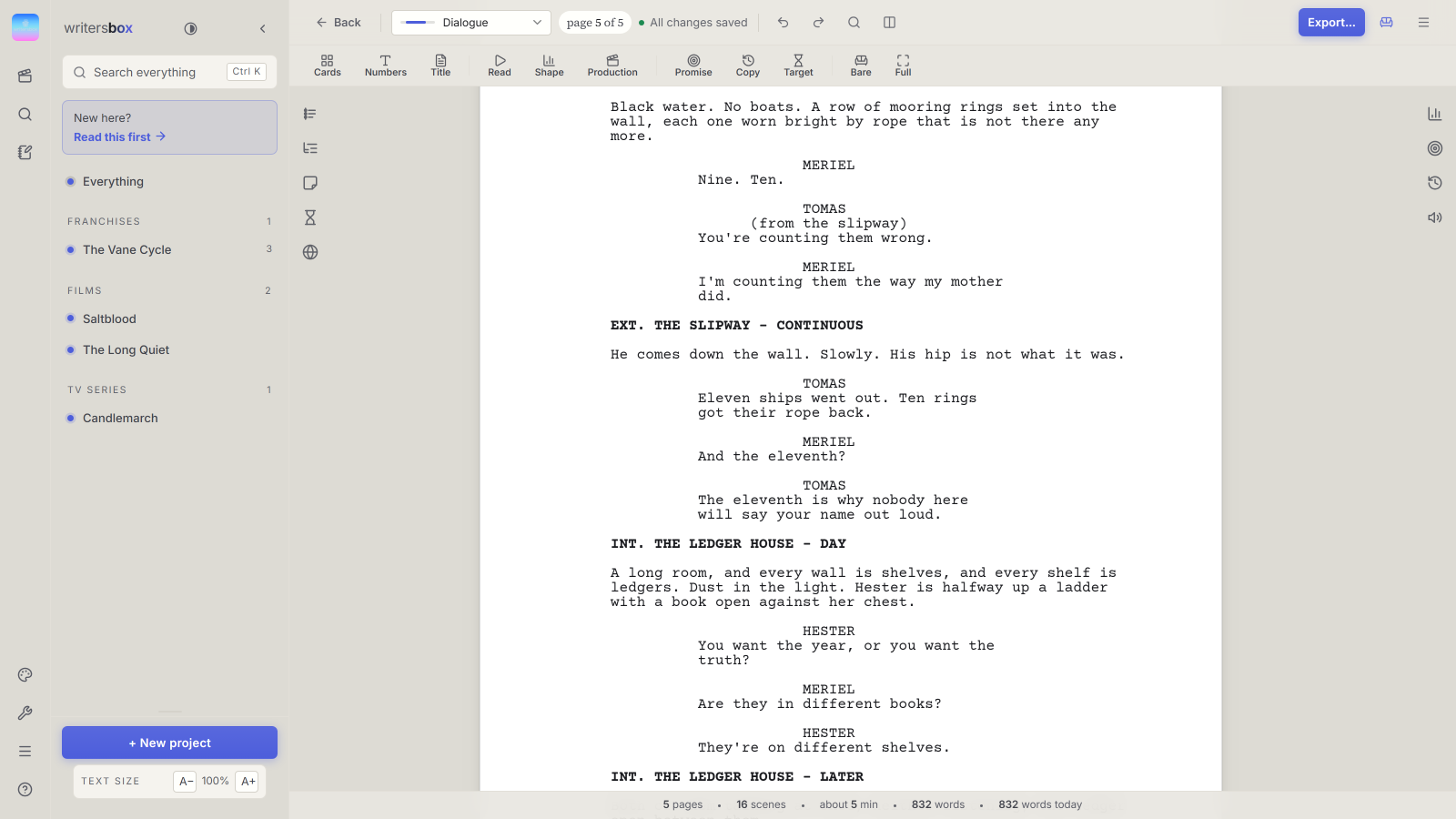
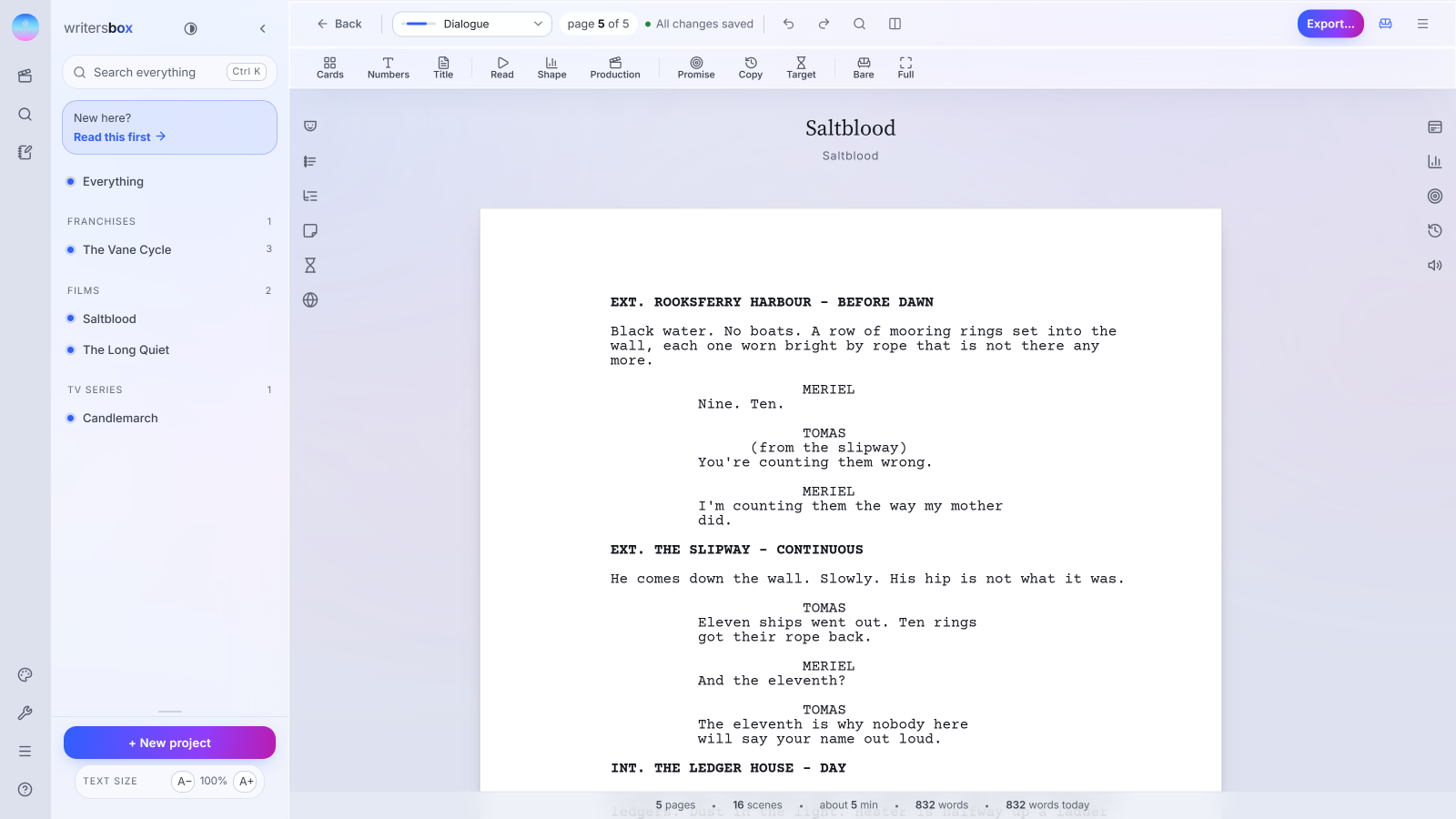
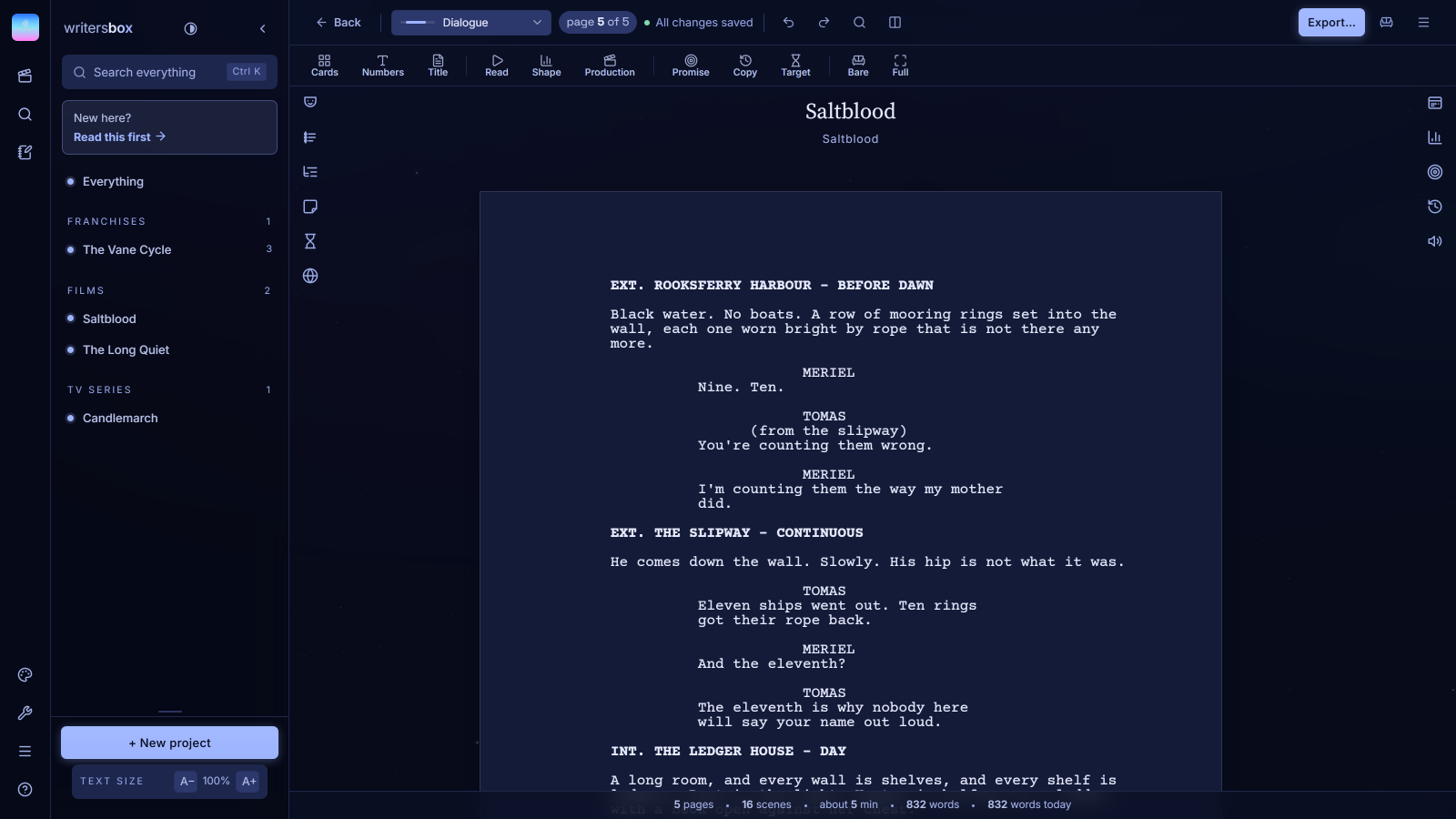
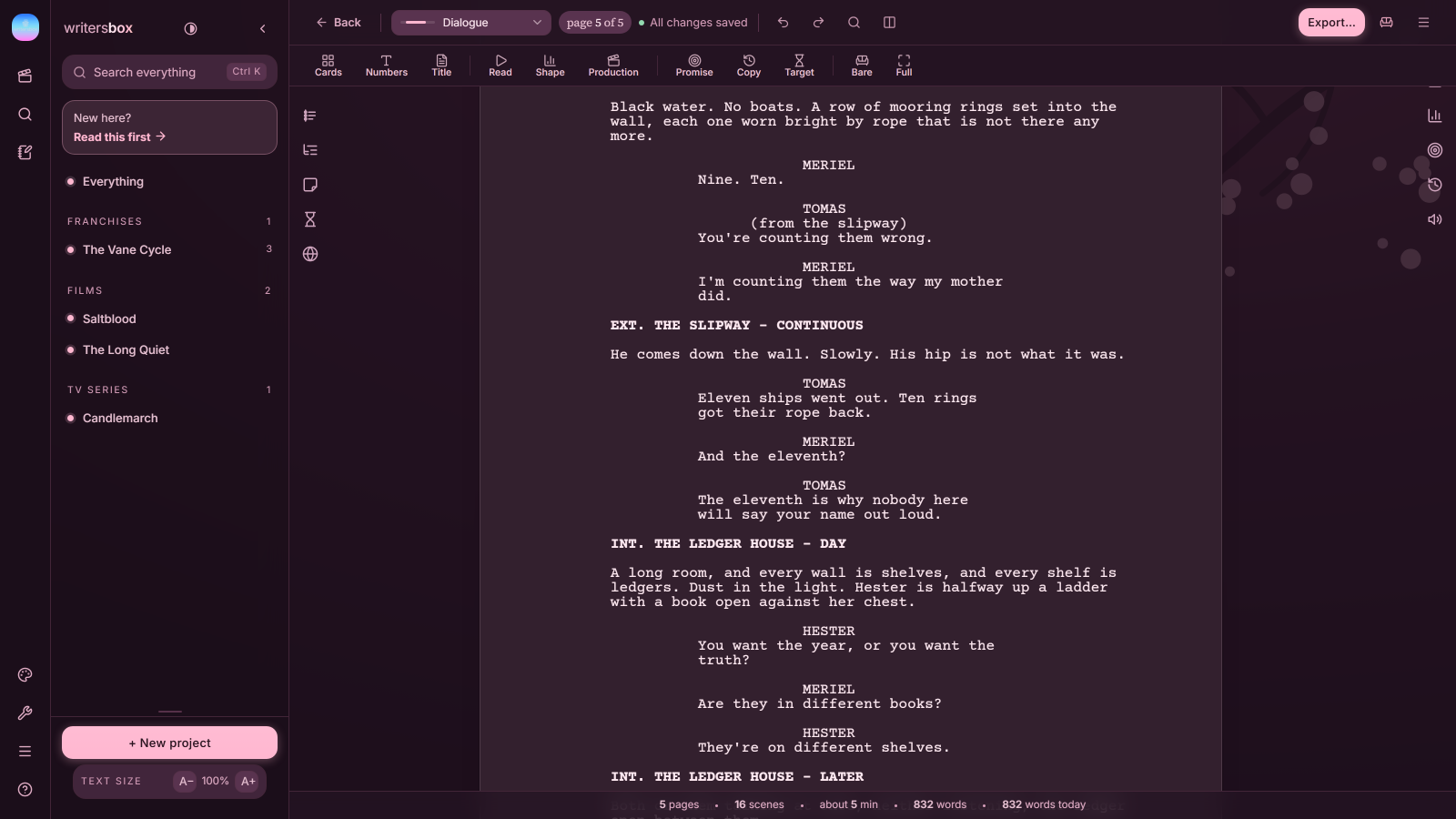
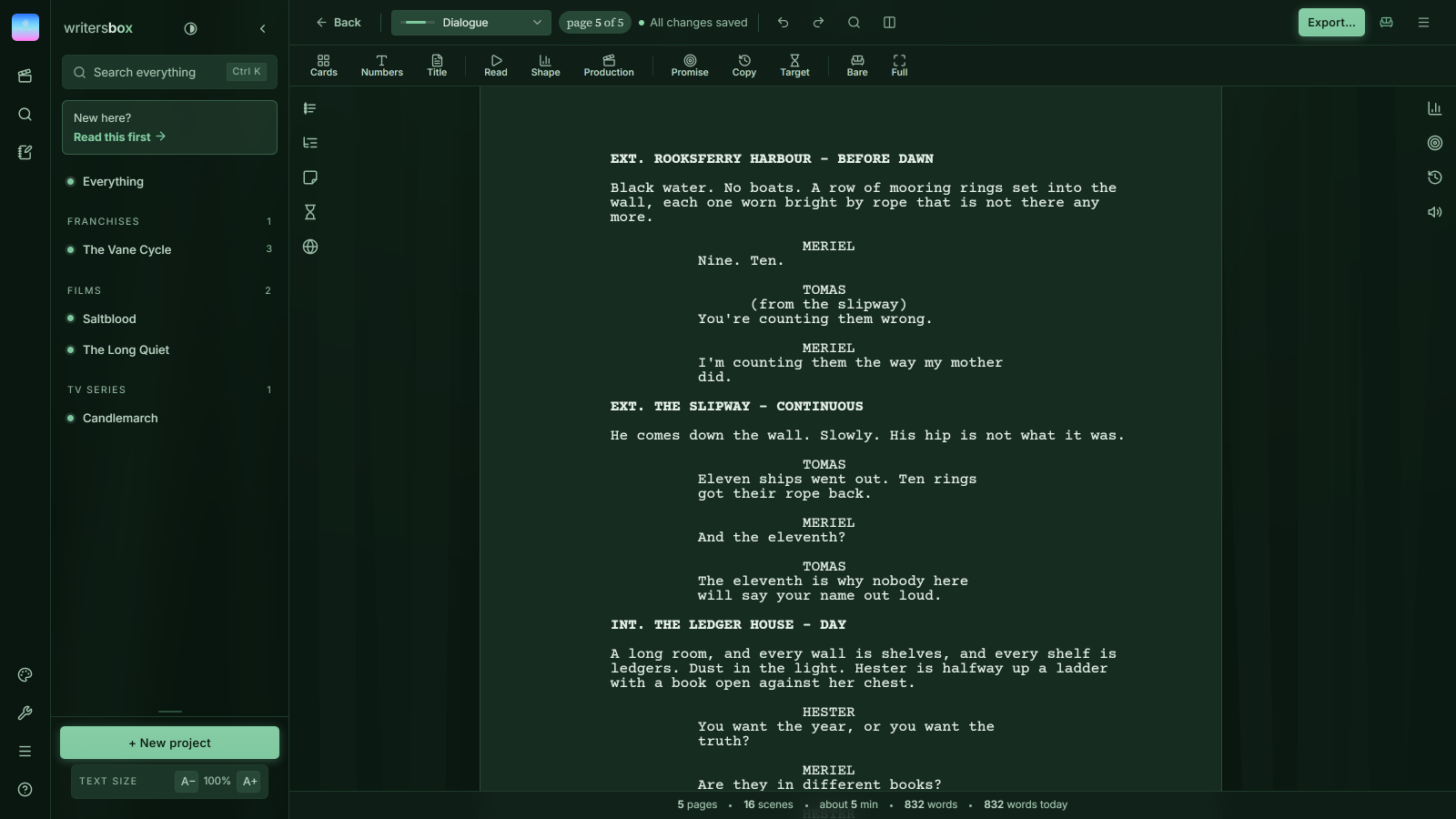
You can also build a theme out of a photograph, and the text size adjusts throughout without breaking the page.
07 · Everything else
The rest of it
Bring your scripts over
Opens and exports Final Draft .fdx, plus .fountain, .docx and plain text. Drag one in and your original stays exactly where it was.
It reads itself aloud
A table read in your computer's own voices, so you hear where a speech runs long instead of guessing.
Revision colours and draft comparison
Keep a copy of a draft and every line you change afterwards wears a * in the margin, right through to the file you send out.
Beat sheets and outlines
Real pages, not notes stuck to the side, with prompts that ask the right question rather than handing you an empty box.
A query tracker
Who has your script, when it went, and what came back.
Type @ and it links
Mention a name anywhere and it becomes a door to the entry behind it.
Everything above is real
Every screen on this page is in the program today.
No mockups and nothing coming soon. If you want to know what's being built next, that's written down honestly too.
Try it on your own script
A month free. No card.
Bring an .fdx in and see how it handles your pages. That will tell you more in ten minutes than any of this will.